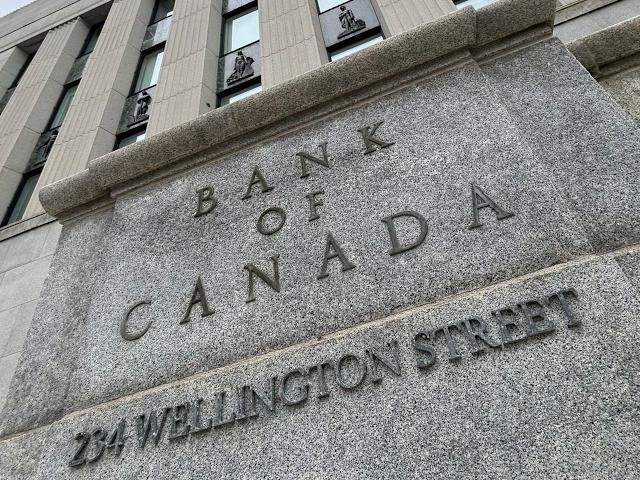
The Bank of Canada Just Hit Pause
The Bank of Canada Just Hit Pause Again. Here's What That Actually Means for Your Mortgage
Canada's rate stays at 2.25% — what's driving the hold, and how it affects variable rates, fixed rates, and your renewal.
Three holds in a row. If you're a homeowner or about to renew your mortgage, you've probably heard the news and wondered what it actually changes for you. Short answer: not much right now — but the reasons behind the decision are worth understanding, especially with oil prices spiking and a war reshaping global markets.
What happened on April 29
The Bank of Canada kept its overnight rate at 2.25%. That's the rate at which major banks borrow money from each other overnight — and it's the main lever the Bank uses to control inflation and economic activity across the country.
This was the third consecutive hold after a long stretch of rate cuts that brought the rate down from a peak of 5% in 2023. The Bank isn't cutting anymore, but it's not raising either. It's watching.
Why gas prices are driving the conversation right now
The conflict in the Middle East has choked off a major oil shipping route — the Strait of Hormuz — and the ripple effects have hit Canadian gas prices hard. We're talking nearly 40 cents a litre more than a month ago, with global oil prices up over 50%.
That pushed CPI inflation (the Consumer Price Index — the broadest measure of how much everyday goods and services cost) up to 2.4% in March. That number had been trending down, so this is a bit of a setback.
Here's the Canada-specific wrinkle: we're a net oil exporter. So while you're wincing at the pump, the country as a whole is actually pulling in more oil revenue. It doesn't cancel out the pain at the gas station, but it does cushion the broader economic blow.
The Bank's focus is on core inflation— a version of CPI that strips out volatile categories like gas and food. That number has been sitting just above 2%, which is right where the Bank wants it. That's why they're not panicking over the gas spike.
Variable rate vs. fixed rate — what actually moves
This is where it gets practical.
Variable rate mortgages are directly tied to the Bank of Canada's overnight rate — specifically, to your lender's prime rate, which typically sits 2.2% above the overnight rate. When the Bank holds, prime holds, and your variable rate payment stays the same. No change for now.
Fixed rate mortgages work differently. They're priced based on Government of Canada bond yields— particularly the 5-year bond. The Bank of Canada doesn't control those directly. Bond markets move on their own, based on inflation expectations, global risk, and investor sentiment. Bond yields have crept up since January, which means fixed rates have quietly gotten a little more expensive even though the Bank hasn't moved.
So if you're renewing into a fixed rate soon, don't assume a "hold" means your rate will be the same as it was five years ago. It probably won't be.
Key mortgage terms, explained simply
Overnight rate— The rate the Bank of Canada sets. It's the foundation everything else is built on.
Prime rate— What banks charge their best customers. It moves in lockstep with the overnight rate. Currently sitting around 4.45%.
Variable rate mortgage— Your interest rate floats with prime. When the Bank cuts, you pay less. When it hikes, you pay more. Right now, it's frozen.
Fixed rate mortgage— Locked in for a set term (usually 1–5 years). Not affected by Bank of Canada decisions directly, but by bond markets. Currently trending slightly higher.
Amortization— The total length of your mortgage (e.g., 25 years). Not the same as your term.
Mortgage term— The length of your current rate agreement, usually 1–5 years. When it ends, you renew — and that's when rate changes hit you.
Stress test— A federal rule requiring borrowers to qualify at a rate higher than their actual mortgage rate, to make sure they could still afford payments if rates rose.
What to watch between now and June 10
The Bank's next decision is June 10, 2026. Between now and then, a few things matter:
If core inflation stays calm, the Bank holds again. If energy prices bleed into the broader cost of groceries, rent, and services — and people start expecting inflation to stick — the Bank may have to raise rates to cool things down. That would hit variable rate holders directly.
Most Bay Street economists still think the Bank holds all year. But with a war reshaping oil markets and the USMCA trade deal up for review this summer, there's more uncertainty baked into this outlook than usual.
If your mortgage is renewing in the next six months, it's worth having a real conversation with a broker now — not because rates are about to crash, but because the window for locking in before any potential hike is narrower than it looks.
Published April 29, 2026. Rate information sourced from the Bank of Canada's official announcement.
